Health and Safety Policy for Cleaners Uxbridge
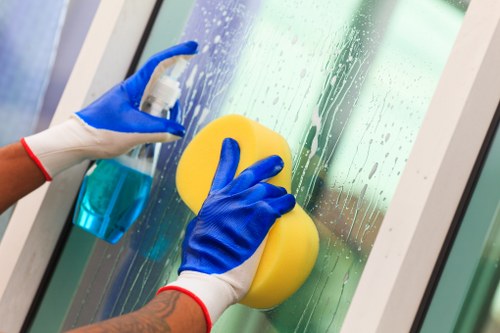 Cleaners Uxbridge is committed to maintaining a safe, healthy, and responsible working environment for all cleaning staff, supervisors, clients, and visitors. This policy sets out the standards expected across every cleaning assignment, with a focus on preventing accidents, reducing risks, and promoting a culture where safety is part of everyday practice. Our approach applies to all commercial, domestic, and specialist cleaning tasks carried out by our team.
We recognise that cleaning work can involve exposure to slips, trips, chemical products, manual handling, and working around other people’s activities. For this reason, every Uxbridge cleaner must follow safe methods of work, report concerns promptly, and use equipment appropriately. The aim is to ensure that all cleaning services are delivered efficiently while protecting the wellbeing of everyone involved.
Health and safety responsibilities are shared. Managers must provide suitable information, training, and supervision, while employees must work carefully, follow instructions, and use personal protective equipment where required. Risk awareness is essential, and all tasks should be assessed before work begins so that hazards can be controlled in a practical and consistent way.
 Health and safety for cleaners in Uxbridge begins with clear planning. Before starting any job, staff should identify hazards such as wet floors, cluttered areas, electrical equipment, sharp objects, or unsafe storage. Where necessary, work areas should be isolated, signs displayed, and access restricted until the task is safe to complete.
Cleaning products must be selected and used according to their instructions. Staff are trained to understand dilution rates, storage requirements, and safe handling procedures. Chemicals should never be mixed unless explicitly permitted, and containers must always be labelled correctly. Using the right product for the right surface helps protect both the cleaner and the property.
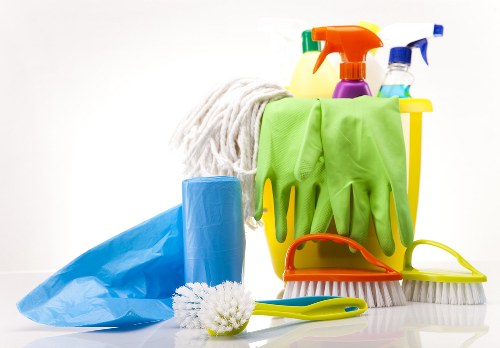 Manual handling is another major part of the safety policy. Cleaner safety in Uxbridge includes lifting techniques, correct posture, and using equipment such as trolleys or mop systems to reduce strain. Heavy loads should be broken down where possible, and team members should ask for assistance when an item is too awkward or heavy to move alone.
Personal protective equipment, or PPE, must be worn when the task requires it. This may include gloves, aprons, eye protection, masks, or slip-resistant footwear. PPE is not a substitute for safe working practices, but it is an important final layer of protection. It must be kept clean, stored properly, and replaced when damaged or worn.
Cleaners Uxbridge also places strong emphasis on housekeeping and prevention of slips and falls. Spilled water, loose cords, and obstructed pathways should be dealt with immediately. Wet floor areas must be clearly marked, and cleaning should be organised so that staff and building users are not placed at unnecessary risk.
Equipment safety is equally important. Vacuums, polishers, steam cleaners, and other machines must be inspected before use and maintained in good condition. Any faulty item should be taken out of service and reported. Staff should never attempt repairs unless they are authorised and trained to do so. Safe storage of equipment also helps prevent damage and reduces the chance of injury.
Training and supervision support every aspect of this policy. New employees receive induction on hazards, emergency actions, safe product use, and reporting procedures. Refresher sessions are provided when procedures change or when risks are identified during review. This ensures that Uxbridge cleaning staff remain confident, informed, and prepared to work safely in different environments.
Emergency preparedness is part of the same commitment. Staff must know how to respond to fire alarms, accidents, spills, and incidents involving exposure to harmful substances. First aid arrangements should be understood before work starts, and any injury or near miss must be reported without delay. Quick action can reduce harm and prevent repeat incidents.
 Communication is vital for maintaining a safe workplace. Cleaners should share information about hazards, access issues, unusual conditions, or client restrictions before starting work. Supervisors must ensure that concerns are treated seriously and resolved promptly. A strong reporting culture helps build trust and supports continuous improvement.
Regular assessment and review keep the policy effective. Work practices should be checked to confirm they remain suitable, and any changes in premises, equipment, or chemicals must be considered carefully. Safe cleaning standards should be monitored as part of normal operations so that improvements can be introduced where needed.
We also expect professionalism and care in every task. Clients’ property must be respected, waste disposed of correctly, and tasks completed without creating unnecessary disruption. A safe cleaner is one who works methodically, uses common sense, and follows established procedures at all times.
 Cleaners Uxbridge health and safety policy applies to everyone involved in service delivery. By following these rules, we protect people, property, and working standards while supporting reliable, high-quality cleaning. Safety is not treated as an extra duty; it is a core part of every job and every decision.